
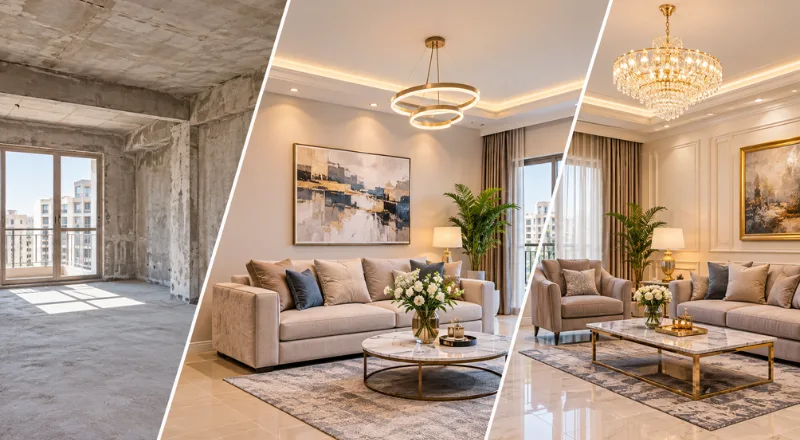
Types of Apartment Finishes vary in terms of quality, materials, and cost to suit different tastes, needs, and budgets, ranging from economical options to luxurious designs that combine elegance with high-quality materials. Choosing the right finish level depends on your lifestyle and how you plan to use the space.
This guide explores the most common apartment finishing levels, highlighting their advantages, disadvantages, and differences in quality and cost to help you make the right choice and create a comfortable, stylish home.
What Does Apartment Finishing Mean?
Apartment finishing involves transforming a bare concrete unit into a functional living space through electrical and plumbing installations, flooring, painting, doors, ceilings, and decorative work. These processes vary depending on the types of apartment finishes and the required level of preparation.
Finishing levels differ in terms of material quality, workmanship, and available fixtures, all of which affect the apartment's final appearance and overall cost. Understanding these differences helps homeowners identify their needs and choose a finishing level that balances personal taste, quality, and budget.
Why Is Apartment Finishing Important?
Apartment finishing improves both the appearance and functionality of a residential unit, enhancing comfort, safety, and overall living quality. Its key benefits include:
- Enhancing Aesthetic Appeal: Creating a cohesive design that reflects personal taste.
- Ensuring Comfort and Safety: Providing properly installed electrical, plumbing, and insulation systems.
- Maximizing Space: Making efficient use of furniture, lighting, and ventilation.
- Reducing Maintenance Costs: Minimizing damage and recurring repairs through quality materials and workmanship.
- Increasing Property Value: Making the apartment more attractive to potential buyers and tenants.
What Are the Types of Apartment Finishes?
The different types of apartment finishes are designed to suit various preferences and budgets. They differ in terms of material quality, level of installations, and decorative details, ranging from luxury finishes to more premium options. Below are the most common finishing types and the features that distinguish each level.
Luxury Apartment Finishing (Lux)
Lux finishing offers a balance between quality and affordability, providing essential installations with a practical and attractive design. It typically includes ceramic flooring, standard paints, doors, windows, and basic electrical, plumbing, and bathroom fittings.
Super Lux Apartment Finishing
Super Lux finishing combines high-quality materials with elegant designs, offering a refined appearance and greater comfort. It typically includes premium ceramic or porcelain flooring, high-quality paints, gypsum decorations, and upgraded bathroom fittings and sanitary fixtures. This finishing level is one of the popular Types of Apartment Finishes for those seeking a balance between luxury, quality, and practicality.
Ultra Super Lux Apartment Finishing
Ultra Super Lux finishing offers a premium level of luxury through high-end materials, modern designs, and attention to detail. It typically includes marble, porcelain, or parquet flooring, high-quality doors, elegant decorations, modern lighting systems, and luxury sanitary fittings.
Fully Finished Apartments
Types of Apartment Finishes also include fully finished apartments, which are delivered ready for occupancy, saving buyers the time and effort of managing finishing work. They typically include flooring, painting, electrical and plumbing systems, doors, windows, and basic kitchen and bathroom fittings. However, material quality depends on the agreed specifications, as this term describes the apartment's readiness rather than its finishing level.
Need help choosing? Talk to a Shary advisor
How Do Apartment Finishes Differ?
The Types of Apartment Finishes differ in material quality, interior fixtures, and decorative details, affecting the unit's final appearance and overall cost. The following table compares Lux, Super Lux, and Ultra Super Lux finishes.
|
Finishing Elements |
Lux |
Super Lux |
Ultra Super Lux |
|
Flooring and Walls |
Local ceramic tiles and standard paints |
High-quality ceramic tiles or porcelain |
Natural marble, premium porcelain, or parquet |
|
Electrical Work and Lighting |
Basic wiring and traditional switches |
Higher-quality electrical components and decorative lighting |
Hidden lighting, LED systems, and smart controls |
|
Plumbing and Sanitary Fixtures |
Basic sanitary fittings and standard mixers |
Higher-quality sanitary sets and mixers |
Premium sanitary fittings and advanced shower systems |
|
Paints, Ceilings, and Decorations |
Plastic paints and simple ceilings |
Premium paints and gypsum board ceilings |
Decorative paints, suspended ceilings, and luxurious designs |
|
Doors, Windows, and Woodwork |
Practical wooden doors and traditional aluminum windows |
Better-quality wood, accessories, and aluminum profiles |
Premium wood, advanced aluminum profiles, and double-glazed glass |
What Are the Apartment Finishing Stages?
Understanding the different types of apartment finishes and their implementation stages helps achieve a balance between elegance, quality, and comfort while avoiding extra costs. The process starts with planning and material selection, followed by essential installations, decorative work, and final inspection.
Design, Planning, and Budgeting Stage
Apartment finishing starts with a detailed plan covering interior design, space distribution, material selection, and budget estimation. This stage includes:
- Apartment Inspection: Measuring spaces and identifying each room's needs.
- Design Preparation: Planning furniture, lighting, and essential facilities.
- Material Selection: Choosing suitable flooring, paints, and fixtures.
- Budget Planning: Estimating material, labor, and additional costs.
Electrical and Plumbing Installation Stage
This stage prepares the apartment's infrastructure to ensure efficient and reliable utilities as part of the different types of apartment finishes. It includes:
- Electrical Installation: Running wires and conduits and positioning switches, outlets, and lighting points.
- Plumbing Installation: Installing water supply and drainage pipes for kitchens and bathrooms.
- Connection Testing: Checking all installations to ensure proper functionality before covering them.
Plastering and Waterproofing Stage
This stage aims to prepare and protect surfaces against moisture and water leaks by leveling walls and ceilings and applying the necessary insulation. It includes:
- Plastering Work: Repairing imperfections, leveling walls, and preparing them for painting.
- Waterproofing: Protecting bathrooms, kitchens, and balconies against water leakage.
- Waterproofing Tests: Checking the effectiveness of the insulation before proceeding with the remaining finishing work.
Flooring and Ceiling Installation Stage
During this stage of the Types of Apartment Finishes, the interior design takes shape through the installation of flooring, ceilings, and decorative elements that complement the chosen finishing level and create visual harmony. This stage includes:
- Floor Installation: Using ceramic tiles, porcelain, marble, or parquet.
- Wall Cladding: Tiling kitchen and bathroom walls.
- Ceiling Work: Installing gypsum board, cornices, and lighting fixtures.
Be the first to know
Join the Shary channel to get new projects, market news and Shary Index updates as they happen.
Painting and Interior Decoration Stage
This stage adds the aesthetic touches that give each space its own character through coordinated colors, paint finishes, and interior decorations. It includes:
- Wall Preparation: Applying putty and sanding surfaces to achieve a smooth finish.
- Painting Work: Selecting suitable colors and applying the required paint coats.
- Adding Decorative Elements: Installing gypsum ceilings, decorative paint finishes, and concealed lighting.
Final Installations and Handover Stage
The apartment takes its final shape during this stage of the Types of Apartment Finishes process through the installation of essential fixtures and completion of finishing details. All work is inspected to ensure quality and readiness for occupancy. This stage includes:
- Installing Sanitary Fixtures: Fitting washbasins, mixers, and toilets.
- Completing Electrical Work: Installing and testing switches, outlets, and lighting fixtures.
- Installing Doors and Windows: Completing carpentry and aluminum works.
- Final Cleaning: Removing construction waste and preparing the apartment for use.
- Final Inspection: Checking electrical systems, plumbing, flooring, and paintwork before handover.
Shary AI
Tell us your budget and Shary AI will shortlist for you
Type the amount and the area to get the units that fit you.
Ad
1% down payment, up to 15 years
Developer offers on the newest projects.
Ad
Know the price per meter in your area
The Shary Index is updated every month.

What Factors Affect Apartment Finishing Costs?
The cost of different Types of Apartment Finishes depends on several factors that influence the choice of materials, quality of workmanship, and overall scope of work. The most important factors include:
- Apartment Size: Larger apartments generally require more materials and labor, increasing overall costs.
- Finishing Level: Lux, Super Lux, and Ultra Super Lux finishes vary in material quality and installation.
- Material Quality: The choice of flooring, paints, wood, and sanitary fixtures affects the final cost.
- Apartment Condition: Whether the unit is a bare concrete structure, semi-finished, or requires additional work influences the finishing budget.
- Designs and Decorations: Gypsum board, suspended ceilings, concealed lighting, and wall cladding increase costs.
- Labor Costs: Workmanship rates depend on technicians' experience and the complexity of the work.
- Electrical and Plumbing Work: The quality of wires and pipes, number of connection points, and type of fixtures affect expenses.
- Finishing Material Prices: Changes in material, transportation, and supply prices impact the overall budget.
- Changes During Execution: Additional work or changes to designs and materials may cause costs to exceed the planned budget.
What Are the Pros and Cons of Apartment Finishes?
Choosing the right finishing level depends on your needs, budget, and available time. The types of apartment finishes differ in cost, material quality, and readiness for occupancy. The following table compares the main advantages and disadvantages of each option to help you make an informed decision.
|
Finishing Type |
Advantages |
Disadvantages |
|
Semi-Finished Apartments |
- Freedom to choose designs and materials. - Better control over the budget and expense distribution. - Ability to supervise workmanship quality. |
- Longer preparation time. - Possibility of additional expenses. - Need to monitor workers and finishing stages. |
|
Fully Finished Apartments |
- Ready for occupancy. - Saves time and effort. - Clear costs based on the contract. - Fewer execution responsibilities. |
- Limited choice of materials and designs. - Potential need for modifications. - Varying finishing quality between projects. |
|
Luxury Finishing Levels |
- Use of high-quality materials. - Elegant designs and decorations. - Modern installations and smart systems. - More distinctive interior appearance. |
- Higher overall costs. - Some materials may require specialized maintenance. - Potentially longer execution periods. |
Semi-Finished vs. Fully Finished Apartments
Semi-finished and fully finished apartments differ in cost, installation levels, and readiness for occupancy. Understanding these differences helps you compare the two options and choose the most suitable one among the types of apartment finishes based on your needs.
- Cost: Semi-finished apartments have lower purchase prices but require additional finishing expenses, while fully finished units cost more as finishing is included.
- Design Flexibility: Semi-finished units offer greater freedom in choosing colors, materials, and decorations, unlike fully finished apartments.
- Material Quality: Semi-finished apartments allow you to control material selection and quality, while fully finished units depend on the developer's specifications.
- Time and Effort: Semi-finished units require supervision and coordination with contractors, while fully finished apartments save time and effort.
- Readiness for Occupancy: Semi-finished apartments need additional work before moving in, while fully finished units are generally closer to being ready.
- Budget Control: Semi-finished units allow flexible expense distribution, while fully finished apartments provide a clearer overall cost based on agreed specifications.
How to Choose the Right Apartment Finish?
Choosing the right option among the different types of apartment finishes requires balancing your budget with your personal needs. Consider the following factors to determine the most suitable finishing level and materials:
- Set Your Budget: Estimate finishing costs and allocate extra funds for unexpected expenses.
- Determine the Apartment's Purpose: Choose practical finishes for personal use or economical options for investment and rental purposes.
- Consider Material Quality: Prioritize durable electrical, plumbing, waterproofing, and flooring materials to reduce future maintenance costs.
- Choose a Suitable Design: Ensure decorations complement the apartment's size and furniture layout while maximizing natural light.
- Consider Time and Effort: Choose semi-finished units for greater control over execution or fully finished apartments to save time.
- Hire Qualified Professionals: Work with reliable engineers and finishing companies, and request a detailed cost estimate before starting.
Essential Tips Before Finishing Your Apartment
Choosing the right level among the different types of apartment finishes requires careful planning based on your budget and needs. Selecting suitable materials and supervising each stage helps ensure quality and avoid unexpected costs. Here are some essential tips:
- Set a Budget: Cover all finishing stages and reserve extra funds for unexpected expenses.
- Choose Quality Materials: Use durable materials for electrical systems, plumbing, waterproofing, and flooring to reduce future repairs.
- Hire a Professional Supervisor: Work with an experienced finishing engineer to ensure the work meets the agreed specifications and design.
- Inspect Initial Installations: Test electrical wiring, plumbing, drainage, and waterproofing before covering them.
- Check Quality Before Handover: Inspect flooring, paint, doors, windows, and sanitary fixtures, and ensure all defects are fixed before handover.
Frequently asked questions about Types of Apartment Finishes
What Are the Types of Apartment Finishes?
They include Lux, Super Lux, Ultra Super Lux, semi-finished, and fully finished apartments, each differing in quality and installations.
What Is the Difference Between Lux and Super Lux Finishing?
Lux uses basic materials, while Super Lux offers higher-quality materials and more refined designs.
Which Is Better A Semi-Finished or Fully Finished Apartment?
Semi-finished offers more design flexibility, while fully finished saves time and effort.